Julia Ballesteros Sentíes, Montessori for Dementia, Disability and Ageing Trainer
Imagine a world where every smile is like an invisible hug.
We can build this world with small acts of kindness.
These gestures of grace and courtesy, directed at ourselves, others and our environment, have incalculable power. Behind each of them lies a fundamental truth: their impact is profound and transformative. In life, these small acts of kindness become something big, capable of transforming moments of hopelessness into hope, and of nostalgia into gratitude.
Today, I invite you to focus your gaze on how restorative and healing small acts of grace and courtesy that promote good treatment can be. These acts of kindness that fill us with hope so that together, we can build a world of peace.
Recently, a student of the Montessori certification for dementia and aging shared with me that, during her internship, in a nursing home, she came across a space where there were some people.
They had different backgrounds, interests and abilities; they all had particular needs and unique stories. These people were sitting in the same place for many hours looking at each other, feeling the slow passage of time. Bored, without hope, existing without living, trapped in the past, with nostalgia around their necks and waiting for the cessation of life. Some had anxiety throbbing in their chests because of the anguish of not knowing what would become of them, feeling that something was amiss.
In this place they were letting their long-term abilities fade, burying their longings and dreams, losing the present moment, this one instant that we all have, this spark of life that is here and that passes.
This is not a criticism, it is a call.
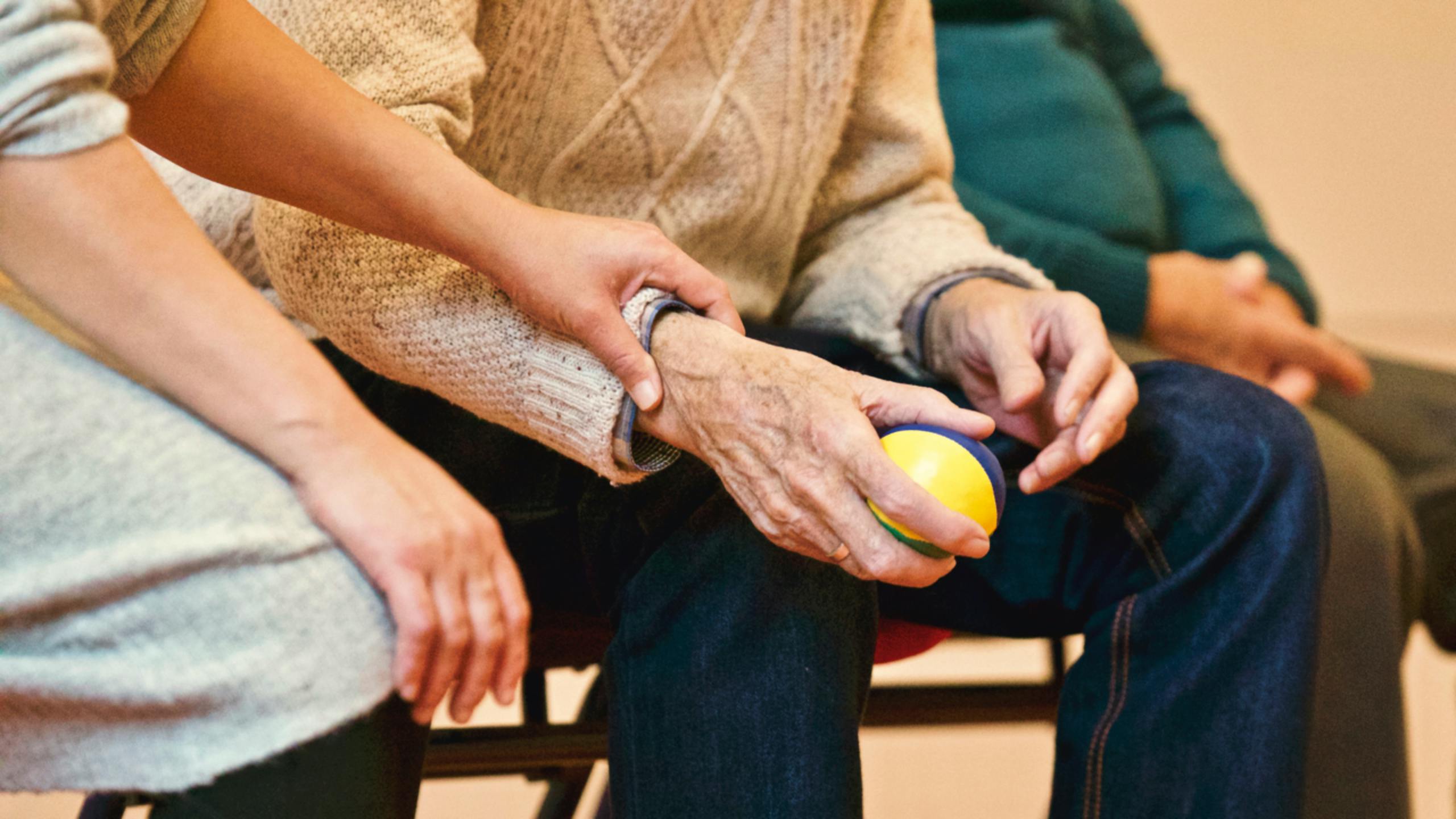
Photo by Matthias Zomer
Practices that today are part of the day-to-day care for the elderly can be deeply hurtful to the heart and soul. No matter how old a person is, they deserve to be seen, appreciated, and considered as an important part of their community.
As she crossed this hallway, the student looked at the people and kindly gave them a cordial greeting. Later, when she left, the same people continued to sit in the same place, as if time had frozen.
Suddenly, a man got up and tried to catch up with her. When she realised it, she stopped and looked at him. He told her with deep gratitude, that he thanked her for having greeted him in the morning, because that made him feel very good. He didn’t want to pass up the opportunity to tell her in person before she left.
“Miss, thank you for your greeting; I haven’t been greeted for a long time and I haven’t talked to anyone for days. You saw me.”
Why do you think He felt the need to stop and thank her?
With this greeting, the man felt valued, seen, dignified, taken into account, appreciated, validated, among others. A small act of grace and courtesy had transformed his day. This simple, real and powerful example gives us a very important reflection on the power of our words, intention and our actions. There will be many other things that are not in our hands, but kindness, grace, and courtesy are in each of us. I share with you a quote from a therapist named Pepa Horno:
“It is not possible to exercise violence in an environment that does not allow it.”
And why mention a word as strong as violence or abuse when we are talking about a greeting?
Let me explain: there are many types of violence and not all of them are visible; not all of them leave blows or physical wounds. Sometimes, ignoring a person, not letting them know that they are important by taking them into account, ignoring their needs, overprotecting, deciding for them, criticising, talking about them as if they were not present, mocking and making jokes about their failures, etc., are also acts of violence that cause deep wounds that reach the centre of the heart.
That’s why we don’t see the scars, but they are there and can be crueller than a blow or a scream. These wounds disrupt self-esteem, self-worth, affect the integrity of the human being and rob the right by nature to dignified treatment.
These practices are part of a generalised action, practices towards the elderly have been normalised by prejudices and stigmas that have not been questioned. But you have the power to change this with small acts of grace and courtesy with the people around you, starting in your home by sowing seeds of kindness in your children.
Grace and Courtesy in the Home
In everyday life, in your home, grace and courtesy can be observed in very simple actions.
Greeting your children in the mornings and thanking them with intention when they perform an act of kindness. We also achieve it when we treat those around us with greatest respect, or simply by preparing a beautiful space for breakfast. That detail of setting the table, choosing a favourite dish or utensil, stretching the tablecloth before placing the plate, folding the napkin or arranging the vase, seems simple and ordinary. However, grace and courtesy are present in these movements and in the intention of each action, which dignifies the person.
Grace and Courtesy to Oneself
This also has to do with kindness towards oneself; it is an act of consideration and recognition. These actions lead us organically to good treatment. It’s important that we start with ourselves and start with the people we love in our home and work with.
Respect and consideration begin in the heart and expand to the entire universe. If we begin to consider that we are worthy of dignified treatment for the simple fact of being and being here, we will undoubtedly be able to recognise it and make it possible at all times with others.
How to normalise good treatment?
Through our actions, through micro lessons of grace and courtesy, through reconnecting with our human essence, with compassion and respect.
As well as greeting or eating nicely, actions that seem habitual or common, but making these movements conscious ones allows us to be in the here and now, and to exalt the essence of life and the human being. Life is made of moments, as my grandmother Carmela used to tell me.
So, let’s make every minute count. Together, let’s create and weave a present and a future where good treatment is the norm. Thank you for being fair as you are, thank you for every action you take thinking of yourself and others.
ABOUT THE AUTHOR
Julia Ballesteros Sentíes is a Licensed Therapist in Human Communication and holds a Bachelor’s Degree in Human Communication Therapy. With more than 27 years of experience, she specializes in the implementation of the Montessori Philosophy for people with disabilities, dementia and aging. Her work focuses on the education and training of caregivers, family members and professionals, as well as on accompaniment and neurorehabilitation, always seeking to improve the quality of life of people throughout all stages of their lives.
She is an active member of several organisations, including the Board of Directors of Montessori Mexico, the Board of Directors of the Mexican College of Therapists in Human Communication and a member of the MDDA (Montessori Dementia, Disability and Aging) Subcommittee of the International Montessori Association. She has designed and taught workshops and educational programs, in addition to offering personalized and group advice on the care of the elderly.
She studied Thanatology and has been trained in palliative care planning. In addition, she has studied as a death doula, serving as a companion in the end-of-life process. Her focus is on providing emotional support and human accompaniment, helping people and their families to move with dignity and peace through this significant moment of existence. Her commitment is to offer a space of understanding and respect, where every life story is honoured and every farewell is an act of love.
Julia is a speaker at various national and international events on the implementation of the Montessori Philosophy in adults, the elderly, people living with disabilities, as well as in dementia care. Her approach is based on dignity and respect for people, promoting their autonomy and well-being through the Montessori Philosophy.