Guadalupe Borbolla, AMI 12–18 Trainer
The environment prepared for the third stage of development must have the same basic characteristics of all Montessori environments plus the specific characteristics that are required to aid development according to the characteristics of adolescents.
The three main elements of the Montessori environment are: the adolescent, the role of adults and the means of development. At this stage there is no longer any specific Montessori material. The 12-year-old child weans themself from the material little by little as their power of abstraction matures and they begin to understand the concepts behind the material in an abstract way. However, the adolescent environment also has all the materials that will be necessary for the adolescent to explore the new knowledge that he or she will acquire in this new stage.
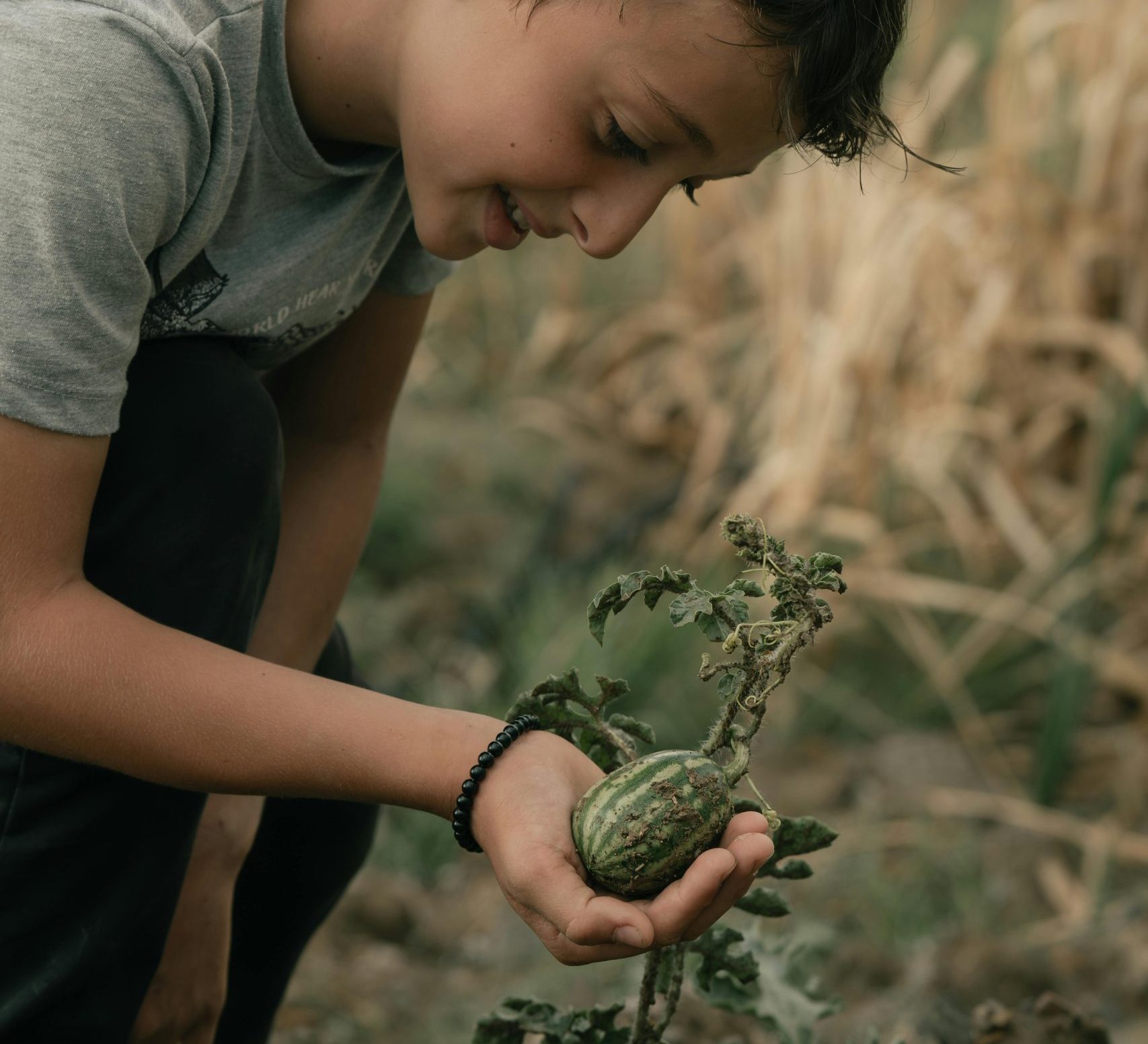
An ideal prepared environment for the teenager is the farm. The farm is an environment that gives the adolescent the opportunity to develop the characteristics that distinguish them.
- Responsibility and roles: Each adolescent will experience different roles and the responsibilities that accompany those roles, as they advance in their occupations.
- Respect for work: Adolescents will do both individual and collective work. There is what I have to do and there is also what we have to do as a work team.
- Respect for personality: The adolescent will experience that each of us has a unique personality. This realisation goes beyond whether you like or dislike your partner or whether they are kind or sometimes rude. They will understand that this required a psychic construction that began at birth and that at this age everyone is who they are. Now they can model some aspects of their personality and consciously improve it if they want to. It is an important and interesting job in adolescence. Knowing yourself is essential at this age.
- Group identity: The group has an identity. All of us are involved and the group is part of each of those who make it up.
- Bond with people: we are all important and that is why we maintain a bond.
- Care for others: others are important to me.
- Confidence: Here I can make mistakes and start again.
- Flexibility: Many ways to solve a situation or approach to perform a task.
- Teamwork: Support networks and problem solving
- Meaningful work for others: What I do is important for others.
- Agile and sincere communication between them.
- New cultures: You will be able to meet young people from different parts of the world.
- Positive activity: everything has a remedy, everything can be fixed, we learn from all mistakes, we are all valuable.
- Moral support: We are here for you, we understand and know what you need.
- Recreational time: time to share and be together in a casual and fun way.
- Cooking classes, music, sports and various workshops according to the choice of the majority.
- Gratitude for the opportunity of life and for what each one contributes to the community.
- To discover the potential of each person and value it.
- Cultural learning: Absorbing the culture of the farm and peers.
- Leadership: Possibility of performing different roles.
- Inclusion: We all fit here, we are all welcome.
- Energy of maintaining order: The order that serves the well-being of all.
- Organisation to address problems: A thousand opportunities for problem solving that arise daily.
Community life is an environment where situations arise that must be addressed. It is from these situations that adolescents learn by resolving conflicts and everyday situations. This is a great advantage for the teenager, especially for those who come from the city and have not had contact with life in the countryside. The farm is a real gift for adolescent development.
Residential Life and Moral Development
Moral development begins at age 6 and continues until age 12. The adolescent already has a moral development that they will now put into practice in an environment much more complex than the elementary environment. This is an opportunity for adolescents to practice their virtues and develop their character through the development of the will and the free choice of their occupations and tasks.
The young person exercises their sense of personal and group responsibility. The farm has the magic of creating daily educational moments (teachable moments) and practical situations thanks to which it can create a just community that resembles real society. In this community, the young person creates awareness of the other and thus has a personal development. This community of adolescents is watched over by the adults, protecting the natural fragility of age. The adult will be a model of the values and attitudes that we want them to internalise. The farm is then a safe space with a variety of opportunities as well as a connection to nature. The farm is a safe place to take risks without the family judging it.
The farm is focused on work. Work is the most important thing and everything revolves around it. We want the adolescent to feel useful, apt, agile, creative, intelligent, attentive and happy. On the farm the adolescent will practice building a society and will do everything possible to make it work properly for the benefit of all. They are interested and happy to do this experiment and are well aware of how important it is to make it work properly.
It would be very beneficial for young people if you could create this experience for teens regardless of the location or type of program. This would be a unique opportunity for them. Community life at adolescence gives an experience that they will carry with them throughout their lives.
ABOUT THE AUTHOR
Guadalupe Borbolla holds a degree in Political Science from the University of Birmingham, England. She holds a postgraduate degree in Special Education from the West London Institute of Higher Education, London, England and a Master’s degree in Education from Loyola University, Maryland.
She is a guide for the Children’s Community, Children’s House, Elementary and Adolescents of the International Montessori Association. She is an AMI Trainer for children and adolescents, and teaches courses in Cuernavaca, Mexico, and Santiago de Compostela, Spain at the IMMAC Training Center, A.C. She has been involved in Montessori education, first as a mother and then as a guide since 1977. She is the Director of the Montessori School of Tepoztlán, in Cuernavaca, Morelos, Mexico, an institution that has been providing Montessori education for 35 years to children from Infant Community to High School (from 1 to 18 years old).